AI-translated. Read the original in KoreanEmbedded slides, videos and images remain in their original language.
Looking Back on AWS DNA Cohort 4

Software Engineer
DNA stands for Digital Native Architects, a training and networking program offered by AWS Korea. Here is a look back at my roughly three months in the fourth cohort.
1. Applying to DNA
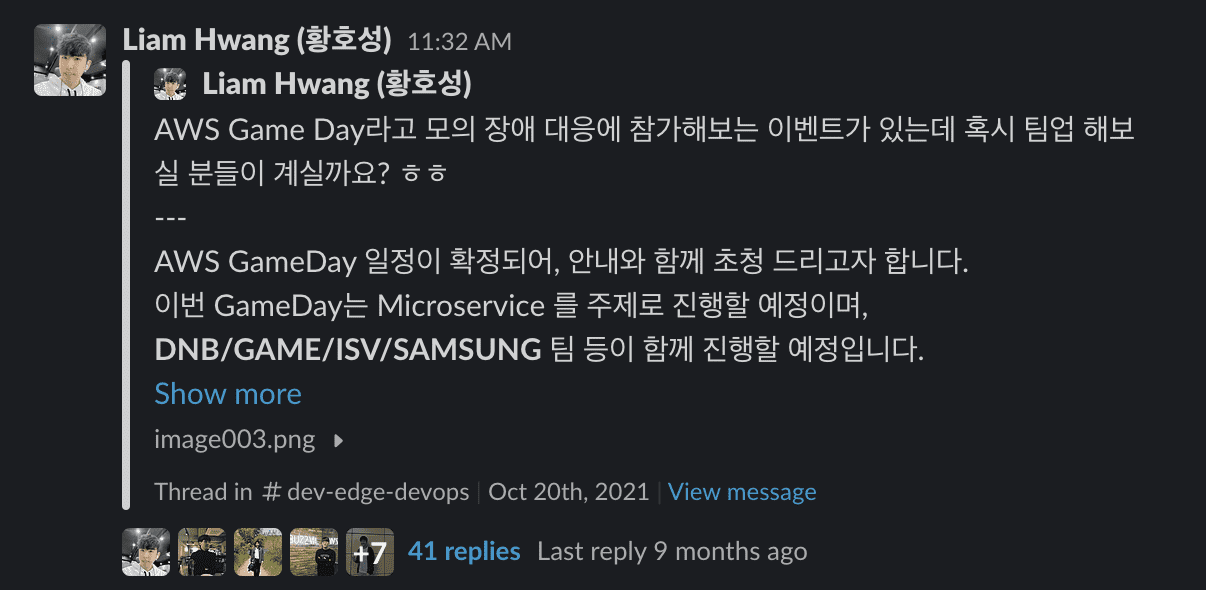
Last November, a message appeared in our company Slack channel looking for AWS Game Day participants. It was the first time I had heard of Game Day, and I had little experience with AWS resources, so I did not join. But I became curious. I read interviews with winning teams (#1, #2) and interviewed colleagues who had participated. Working as a team to respond to incidents in real time sounded both fun and appealing.
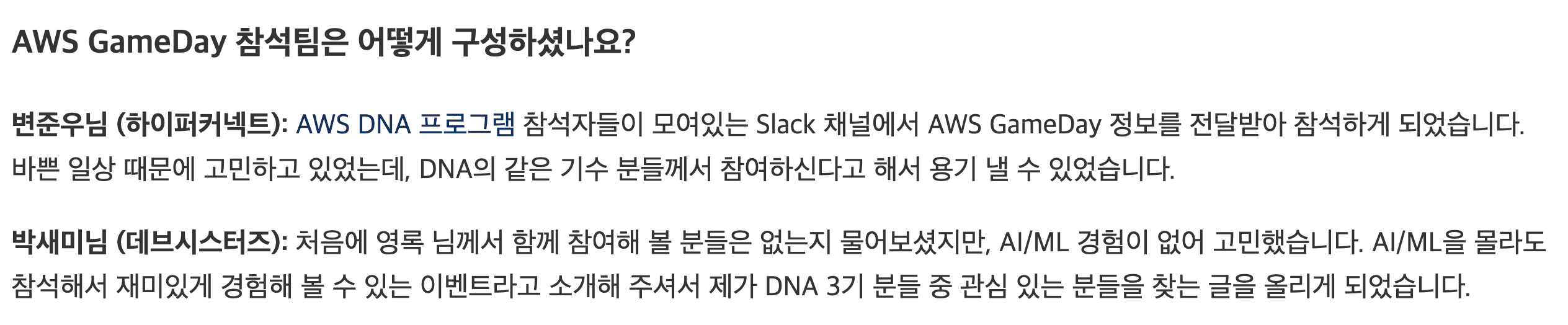
Those winners' interviews introduced me to another program: AWS DNA (Digital Native Architects), whose fourth cohort I later joined. AWS describes DNA as a new approach to cloud training and networking offered by AWS Korea. The roughly three-month program combines learning, networking, and participation in a hackathon or JAM competition. I was particularly impressed that members continued forming teams to enter Game Day even after the program ended, as shown below.
 )
)
After searching for reviews from earlier cohorts, I decided to apply when recruitment opened again. This spring, I learned through our company Slack that an online information session for cohort four was being held, and I submitted an application. A few days later, I received an acceptance email and was able to join the program.
2. Looking back on the program
DNA consisted of eight sessions, one networking day, and a hackathon. Here is a brief account of each.
Sessions
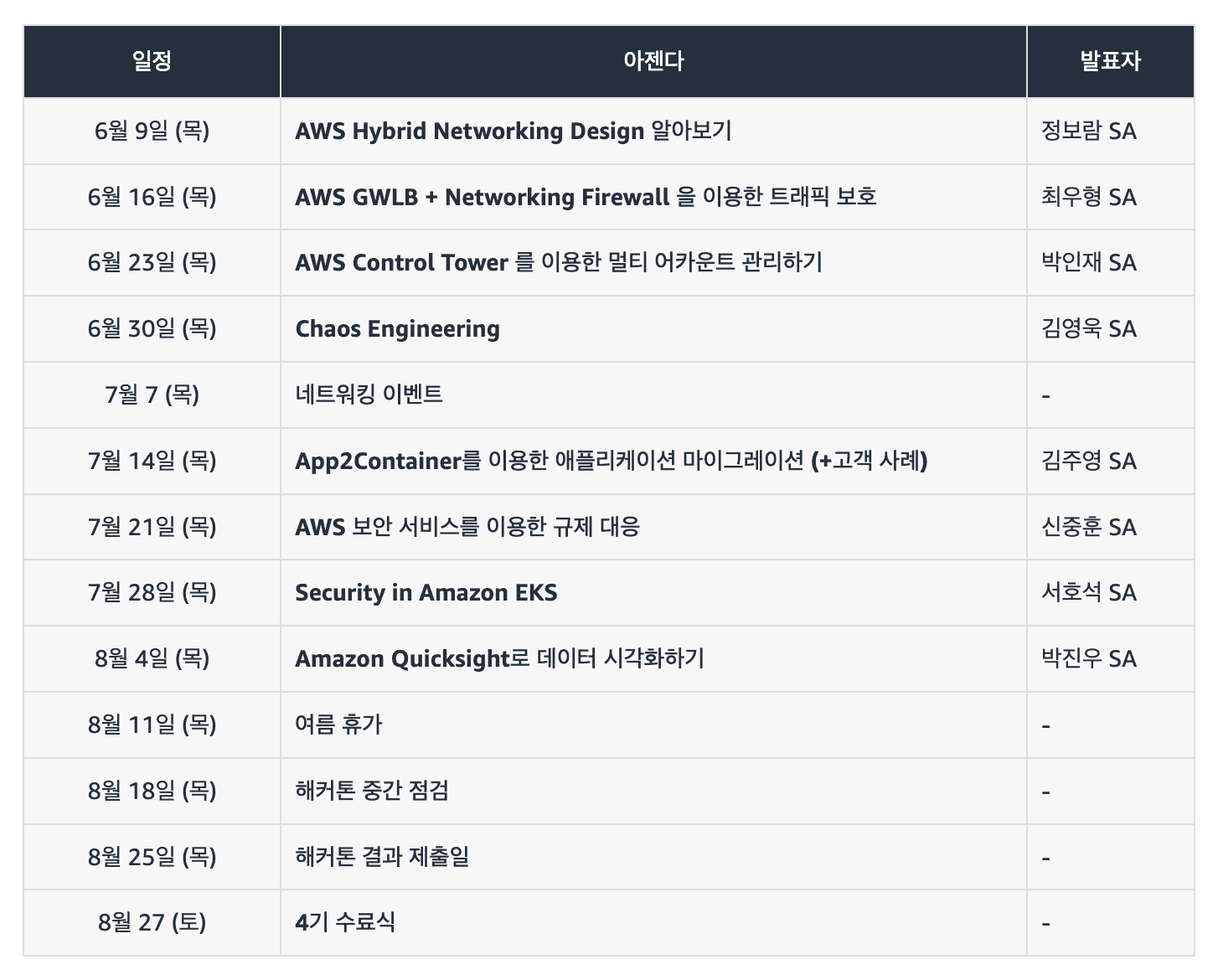
In each session, Solutions Architects introduced AWS services around a particular theme, along with useful background knowledge, best practices, and hands-on exercises. Sessions ran every Thursday from 7 to 9 p.m. Online attendance was available, which made participation easier. After each session, we received exercises to review what we had learned. The generous AWS credits provided for these exercises helped me become quite comfortable with resources I would not normally have had much opportunity to use.
The sessions let me study and try services such as App2Container, Control Tower, and QuickSight. Chaos Engineering was the most memorable session. I had long been curious about it, and the SA's explanations and well-prepared exercises deepened my understanding. The exercises happened to use Spinnaker, Terraform, and Kubernetes, which Buzzvil also uses, so I learned more about the technologies at work too.
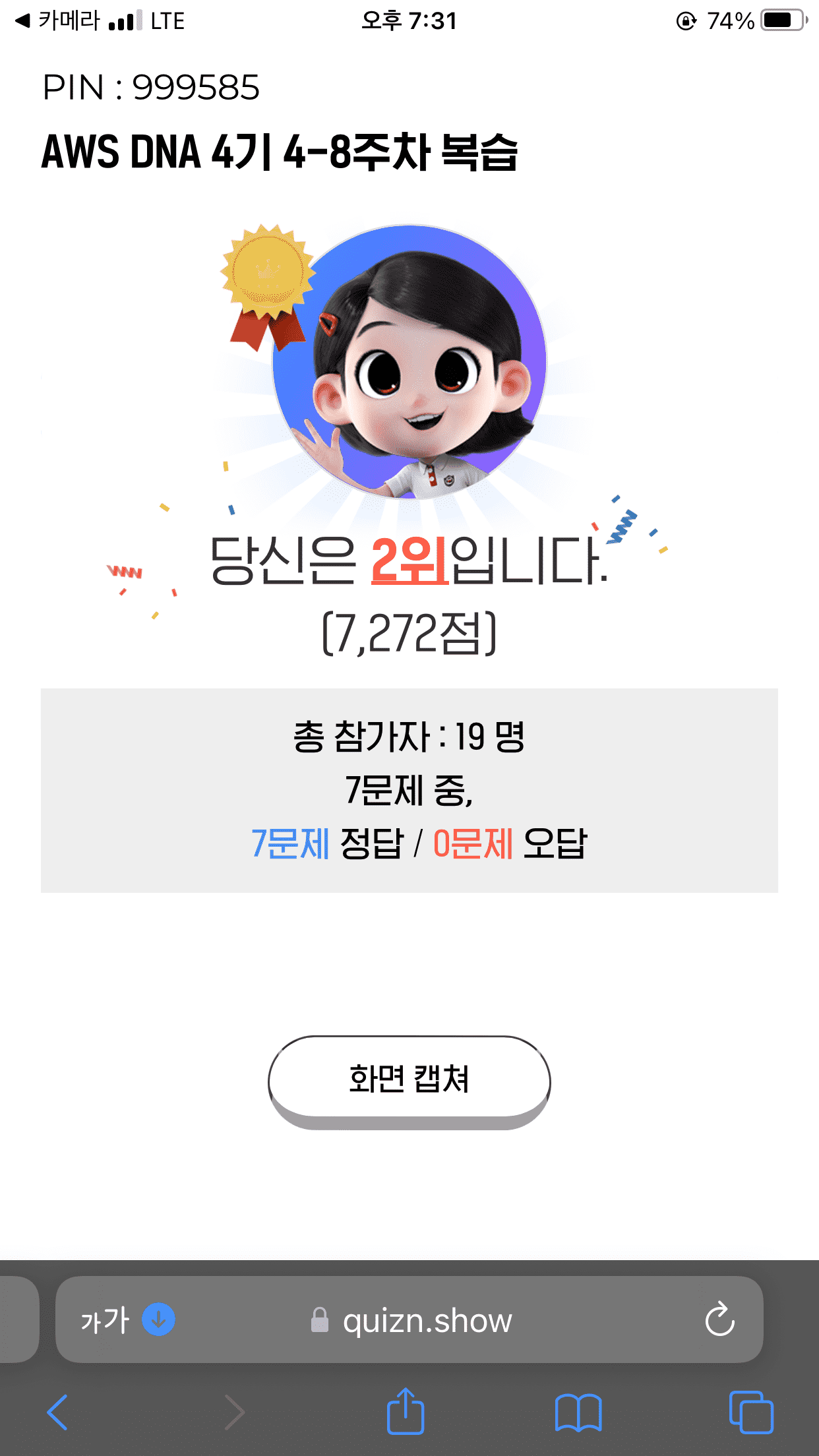
Before each session, the organizers ran a review quiz. Some questions covered the previous session, while others were playful riddles, helping create a lighter, brighter atmosphere. Once, they offered prizes for the top three finishers, and I was delighted to come second.
Networking day
People who usually attended in person seemed to have become somewhat familiar with each other, but those of us who only attended online had few opportunities to speak directly with fellow cohort members.
The organizers arranged a networking day where we could relax over pizza and beer. They had even prepared a list of questions to help when conversation felt awkward, showing how much thought they had put into the event. There were light questions for casual conversation, along with development-related topics such as “What technology are you interested in lately?”
Hackathon
I originally applied to DNA because I was interested in the JAM competition, but this cohort held a hackathon instead. I took part as the leader of Team 7, developing and presenting a service called Team Productivity Newsletter.
It turned out to be a deeply satisfying experience. This was my first time designing an architecture using AWS resources. Thinking it through myself made me much better at understanding architectures drawn by others. Throughout the hackathon, discussions with teammates from other companies and feedback from SAs allowed me to learn from others and improve our work.
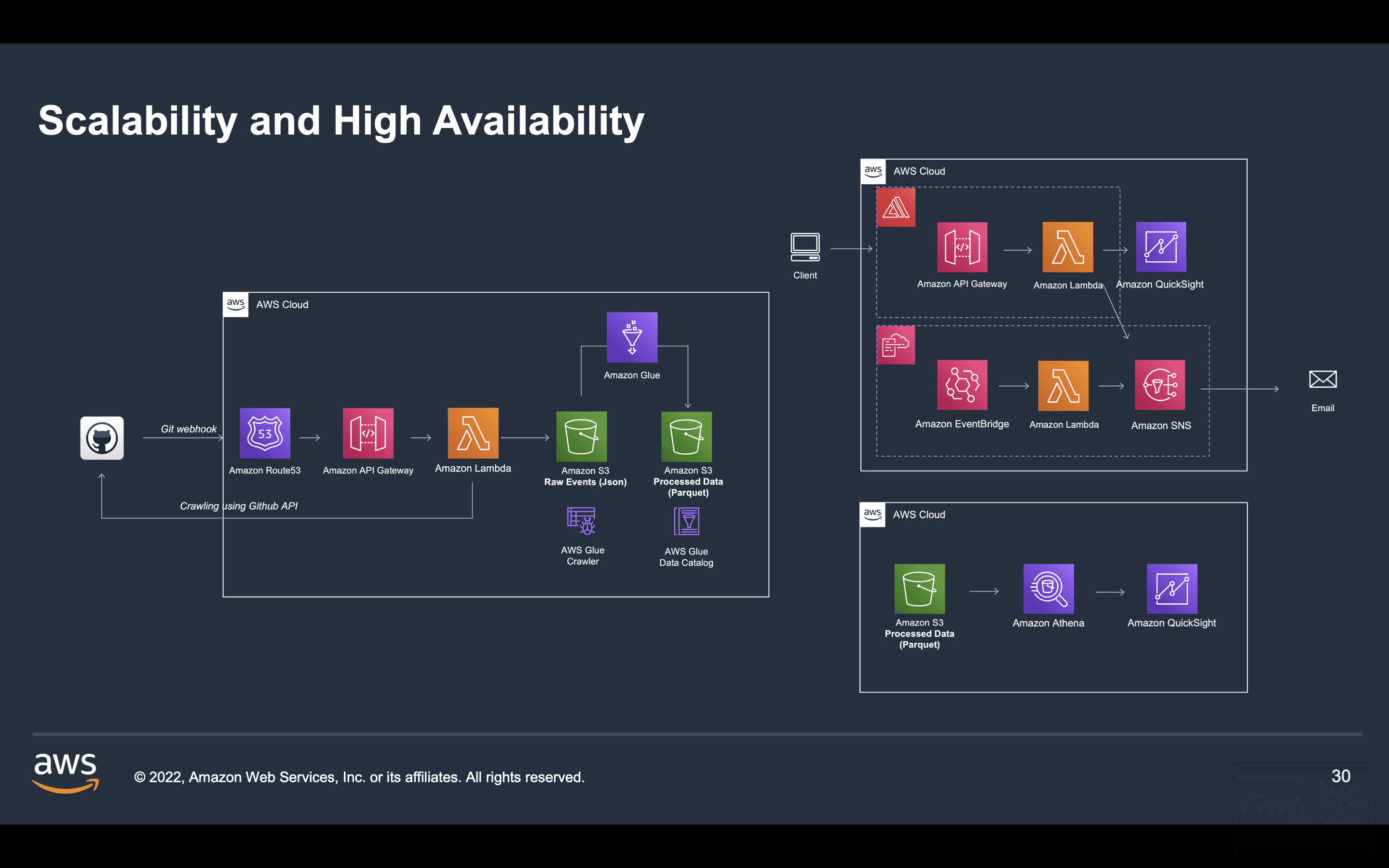
Completing the whole process—from planning and architecture design through development and presentation—gave me a real sense of achievement. Since all of us were participating alongside our day jobs, I expected finding time to discuss and develop the service to be difficult. But after we met once in person and divided the work, everyone took responsibility for development and produced excellent materials. As the presenter, I was very grateful.
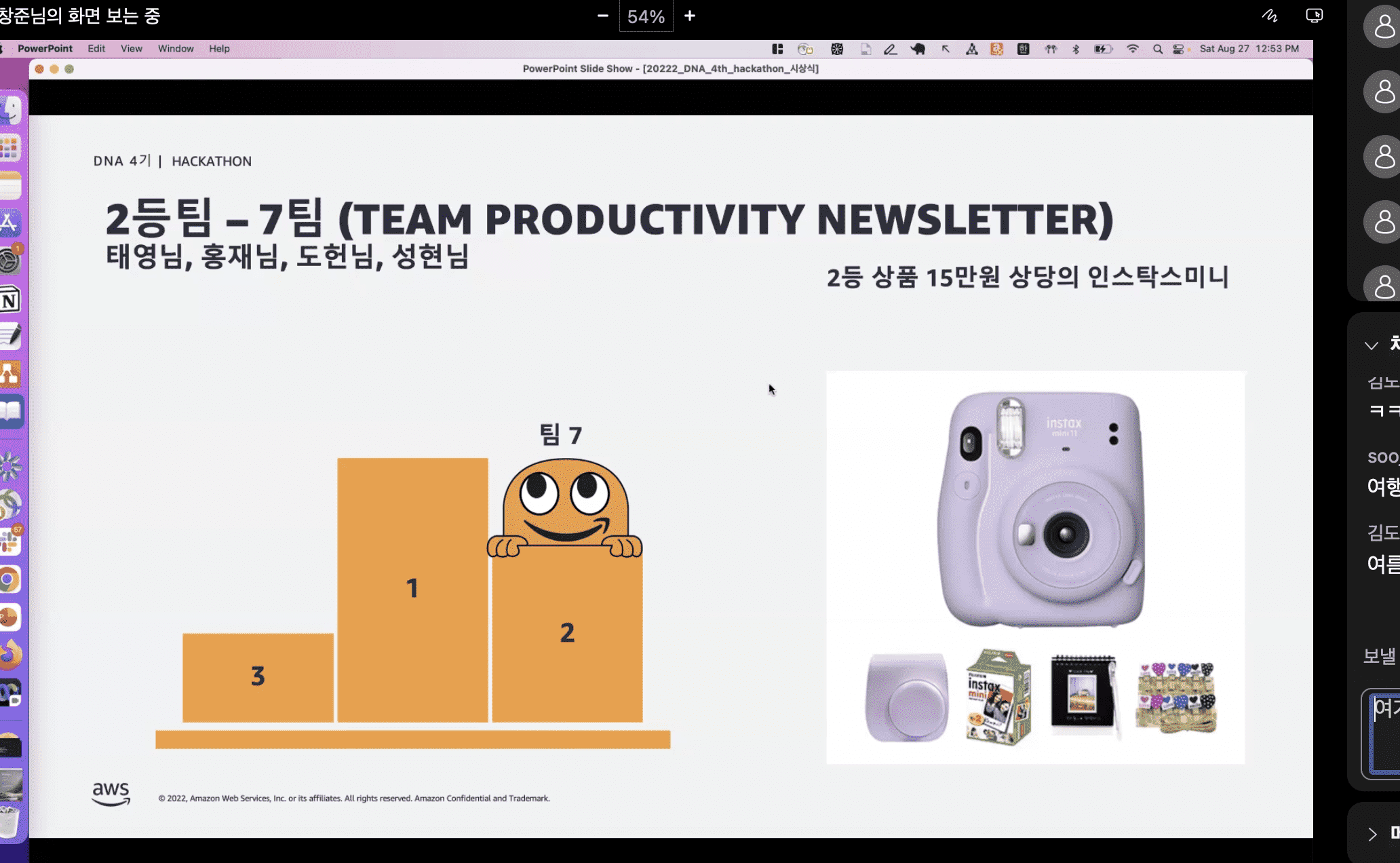
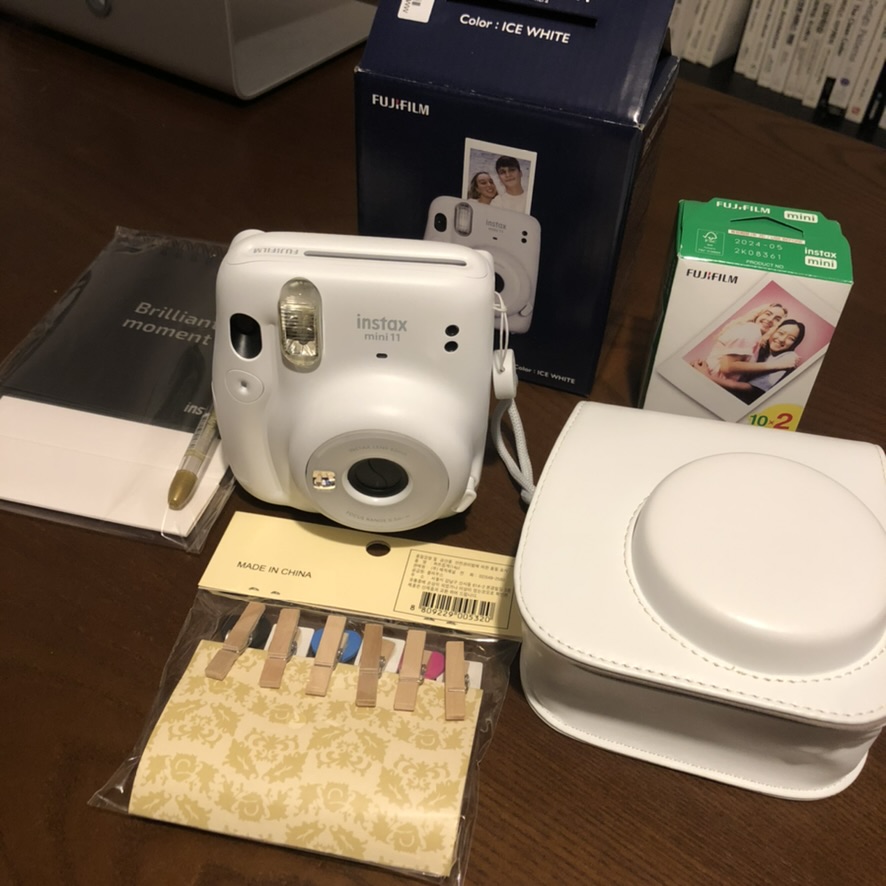
Our team ultimately placed second and received a film camera worth KRW 150,000. The winning team built a service for sharing real-time information during disasters. Watching their live streaming demonstration, I thought the quality of their work was outstanding. They presented immediately before us, so I watched especially closely. I remember feeling certain they would win even before seeing the other teams' presentations.
3. Closing thoughts
The hackathon marked the end of DNA cohort four. The presentations were on August 27, only a week before I am writing this. For several months, I had kept every Thursday evening free for DNA sessions, so it feels liberating not to have that commitment now. I am also pleased to have achieved something meaningful at the hackathon and to feel more confident using AWS services. Meeting so many driven people was motivating too.
Next, I plan to pursue the AWS Certified Solutions Architect certification. I had already been interested in it, and decided to take the exam after learning that DNA would cover the fee. At USD 150, it had felt a little expensive to pay out of pocket, so I am glad this opportunity came along.
DNA made these three months rewarding. Thank you to the organizers for putting together such a rich program. If you are considering joining a future cohort, I highly recommend it!